
K-12 Education
Inside a Middle School Robotics Lab Design Makeover: A Case Study
A student-led school robotics lab design shows how small interventions can make big impacts on STEM learning.
CHALLENGE: Optimize a middle school robotics classroom for better workflow, storage, and student engagement within district budget constraints.
KEY INTERVENTION: Multifunctional space planning, strategic technology placement, custom and repurposed storage solutions, environmental branding
The former shop classroom at Sabin Middle School was packed wall-to-wall with abandoned furniture, old lockers, sports equipment, and woodshop tools. Buried beneath the clutter was more than 1,850 square feet of potential space that robotics teacher Susan Forget desperately needed.
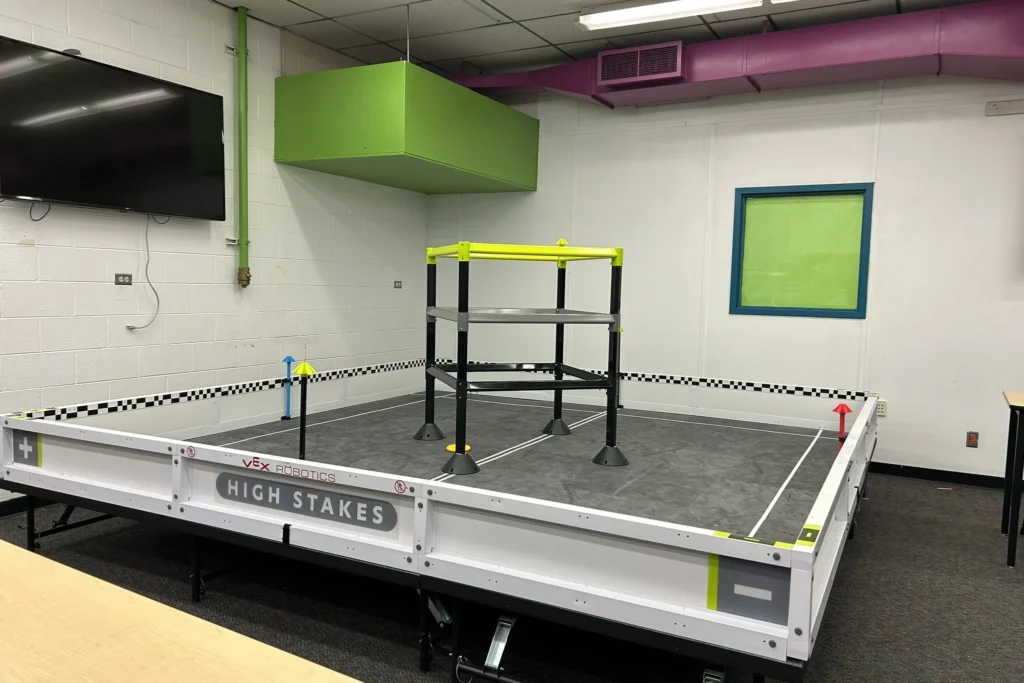
For years, Susan taught robotics across three separate rooms, shuttling students and equipment between spaces. When she finally secured this single, consolidated space, she faced an overwhelming challenge: transform the makeshift storage room into a functional learning environment for 30 students, complete with workbenches, 3D printers, organized parts storage, and a 12’×12’ battle bot arena. And she had one summer to make this school robotics lab design happen.
“I was overwhelmed,” she recalled. “I needed help.”
Research-Driven Design: Observation Before Intervention
Susan reached out to Elizabeth Hartman, a student in the Pikes Peak State College interior design program.
Elizabeth saw an opportunity to gain experience leading a real-world education design project. She recruited fellow student Geneva Sebastian as co-designer and Jane Miller as faculty advisor.
Over two site visits, the team documented existing conditions, inventoried furniture and equipment, and most critically, spent time understanding Susan’s teaching methods and student movement patterns. Although they couldn’t observe classes in session, mapping these workflows would prove essential to effective space planning.
“Most important was your can-do attitude,” Susan reflects. The team’s confidence helped cut through her overwhelm.
Design Solutions: Layout, Storage, and Documentation
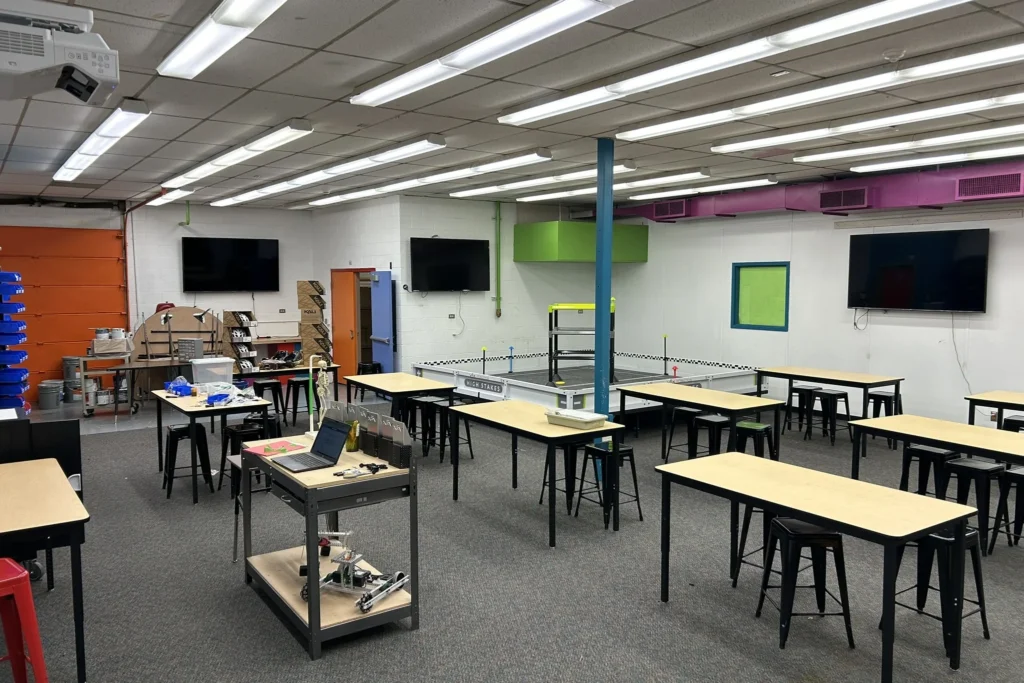
The classroom needed to accommodate 30 students, support team collaboration, and provide organized storage, all while maintaining a clear teaching zone and arena space.
The team specified existing Husky workbenches arranged to support both individual instruction and team-based robotics work. Three monitors placed around the room connected to Susan’s interactive whiteboard at the front of the class, creating a flexible teaching environment.
To further emulate professional labs, the design team consulted engineer John Wiley. Based on his input, the team recommended wider workbenches and team toolboxes, each equipped with standardized supplies, that would teach students accountability for managing their own tools. Other professional lab features, like electrostatic discharge mats, were cut to stay in budget.
“Most important was your can-do attitude.”
— Susan Forget
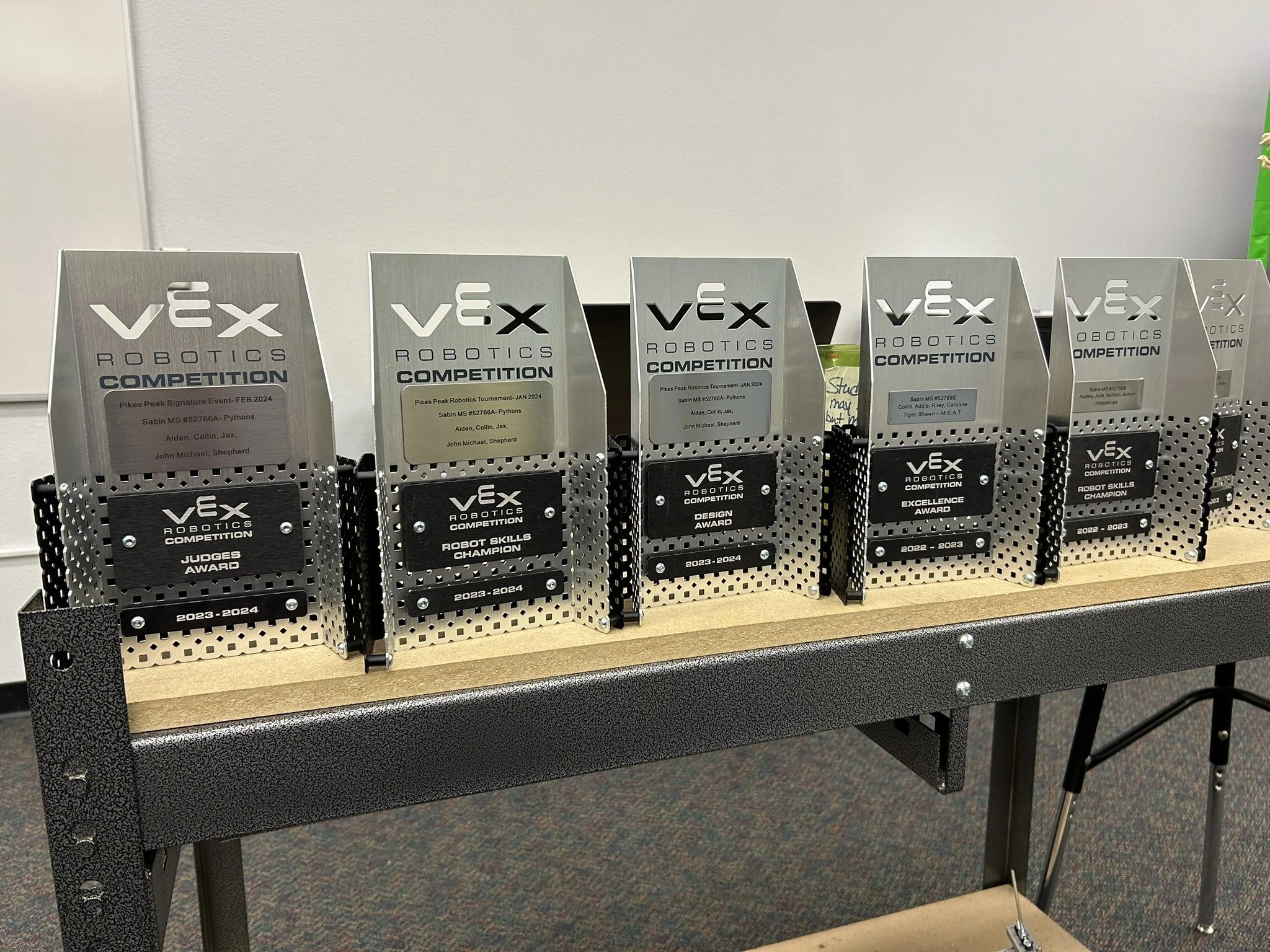
proof of the program’s success.
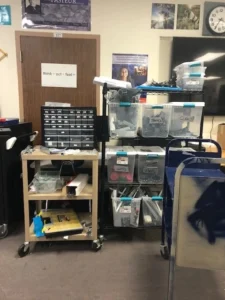
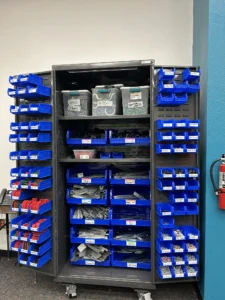
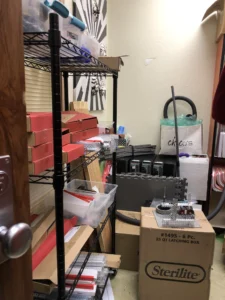
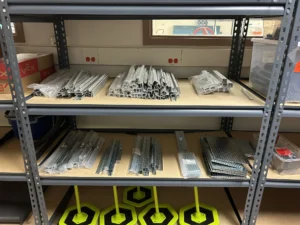
Storage design followed a core principle: the easier it is to put things away, the more likely students will maintain organization. The design team reorganized existing metal shelving in an adjoining storage room for the students’ project bins and robotics kits, streamlining daily setup and cleanup. Built-in cabinetry became storage for class materials, and old cube lockers were repurposed as the base for 3D printer worktops along the back wall.
“The storage room has been key. That change is huge!” says Susan.
The team translated their design concepts into detailed construction documents, including a dimensioned furniture plan, furniture schedule, and elevations. This professional documentation gave Susan’s request credibility and guided the school’s facilities team through implementation.
“I didn’t have to prove it would work,” Susan recalled. “They agreed with your suggestions and followed your diagrams to a tee.”
Making It Work: Design on a District Budget
Throughout this K-12 design project, the design team identified practical, low-cost strategies. Many upgrades were achieved through reuse of existing furniture, such as lab stools and metal shelving. Grant funding covered equipment upgrades, including laptops, a charging cart, and larger adjustable workbenches.
The team specified high-gloss white paint to brighten the windowless space and bold color blocks (inspired by the school palette) behind the TV monitors to reduce eye strain and reinforce school identity.
In summer 2023, students and community members from nearby Rocky Mountain Calvary Church volunteered to clean and repaint the room, while the facilities team installed monitors according to the design team’s elevations. By mid-August, the room was functional.
Some changes were required during implementation. While the new workbenches’ wider surface area and adjustable height were improvements, they were too big for the proposed desk arrangement. To adapt, Susan returned to one of the team’s alternative floor plans, with a more traditional classroom layout.
The battle bot arena, initially placed in the center of the room, was relocated to the back corner to cover the uneven foundation created by a former shop class sandpit. This change had an unexpected benefit: “It allows for proximity control and helps me keep students engaged when they’re at their desks,” Susan explains. The arena was a distraction when kids faced it during instruction.
Even without windows, the classroom feels good. The openness is huge!
— Susan Forget
“Even without windows, the classroom feels good,” observes Susan. “The openness is huge!”
A Space That Works as Hard as the Students Do
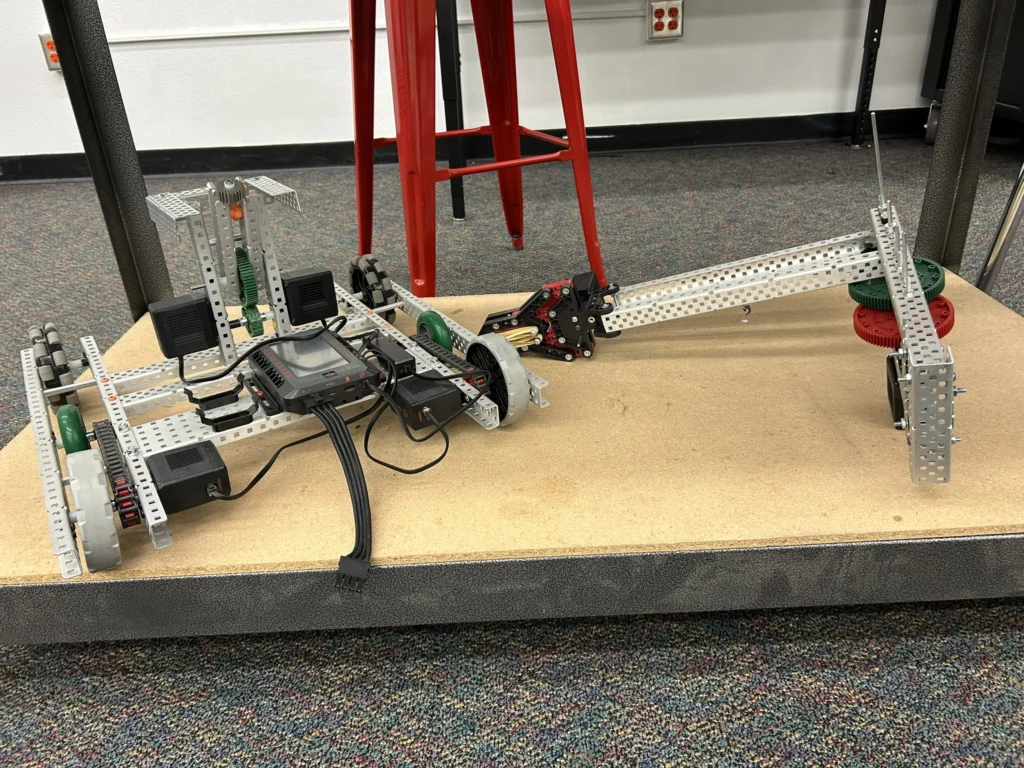
The consolidated classroom saves time and boosts engagement. Students move quickly from storage room to workbenches. Access to the arena in the same classroom allows them to test and refine their bots in real time, building critical problem-solving and teamwork skills.
competitive challenges.
“This [redesign] has been a night and day difference,” Susan says. “It’s really what it takes to do this type of work, for the kids to be successful.”
The classroom continues to evolve. Students proposed adding LED lighting around the arena, and Susan is planning ahead: “I’m hoping to win things, so I’m saving space for banners!”
For Elizabeth, the project proved that user-focused, research-based design can transform education environments, even with limited resources. By listening carefully to how teachers and students actually work, the team turned an overwhelming space into a hub for creativity, collaboration, and innovation.
“I can’t say thank you enough for your support,” she reflects. “I didn’t know what I was going to do! It made all the difference.”